Tuscany
A place of longing for wine connoisseurs
The exquisite wines from Tuscany are known – and loved – beyond its borders.
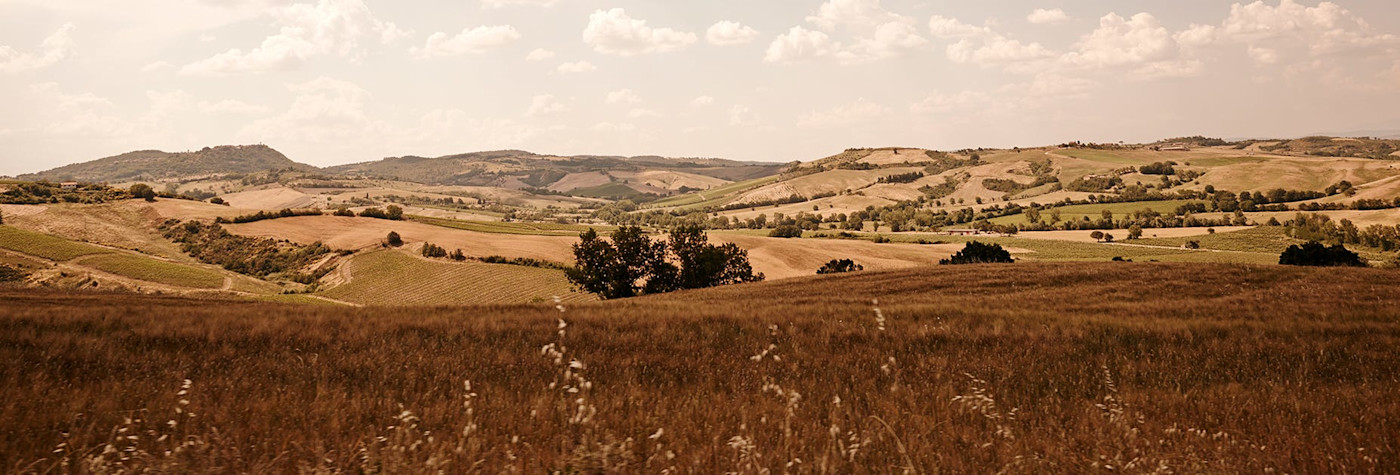
After all, aren’t we all in love with Tuscany? Slender cypress trees on undulating hills, vineyards and tranquil olive groves, medieval villages where life happens in the osteria. Not to mention cities like Florence, with world-famous works of art such as Michelangelo’s David, and Siena, home to the Palio horse race. And always close by: the Mediterranean sea. No wonder the tourists who discovered this dream destination in the 1960s wanted to take a piece of it home with them – and so almost every traveller was packing a bottle of Chianti. Tuscany became famous abroad earlier than any other wine region in Italy.
King Sangiovese
The region in central Italy boasts almost 65,000 hectares of vines. Chianti remains one of the stars – provided you can separate the wheat from the chaff. Connoisseurs appreciate the consistent quality and timeless elegance of Chianti Classico, made from grapes grown on hillsides in the heart of the Chianti region. The recipe for this wine has existed for almost 150 years. In 1872, the baron and winemaker Bettino Ricasoli penned his famous «Chianti formula». The robust Sangiovese grape plays the main role at 70 per cent, supplemented by the sweeter Canaiolo and the white Malvasia for greater drinkability. White varieties are no longer incorporated, but a small proportion of international varieties such as Cabernet Sauvignon or Merlot is permitted. However, Sangiovese still characterises the taste of this wine.
Sangiovese is the most important variety in Tuscany. It sets the tone in the charming Vino Nobile di Montepulciano, which is similar in composition to Chianti. Brunello di Montalcino is highly sought after and expensive. The wine is produced around the village of the same name in a particularly warm microclimate, making it strong and concentrated. It must consist of 100 per cent Sangiovese – which was not always adhered to in the past and caused a serious scandal in 2008.
The Super Tuscan revolution
But Sangiovese is not the king everywhere. French grapes reign supreme in Maremma, an extensive coastal strip in the south of Tuscany. And they have been doing so for over 70 years. In 1944, Marchese Mario Incisa della Rocchetta planted an experimental vineyard in the village of Bolgheri with Bordeaux varieties such as Cabernet Sauvignon and Cabernet franc. Initially, the vineyard produced the family’s table wine. However, in 1968 this revolutionary wine was launched on the market under the name of Sassicaia. It soon caused a furore. Others followed in the marchese’s footsteps, such as the Florentine noble family and wine empire Marchesi Antinori with Tignanello and later with Ornellaia, which is now under the aegis of Marchesi de’ Frescobaldi. This new wine style was not recognised by official regulations, so for a long time the top wines had to be sold under the name Vino da Tavola. They quickly acquired the nickname «Super Tuscans». Today, they are among the most sophisticated and expensive wines Italy has to offer.
Simply delightful
With so much red wine, it would be a shame to forget the other wines of Tuscany, such as the floral white wineVernaccia di San Gimignano with its distinctive almond fragrance or the sweet Vin Santo, which pairs so well with crispy cantucci. Speaking of which, the cuisine of Tuscany is characterised by pleasurable simplicity. Its centrepiece is the bistecca alla fiorentina, a hearty cut of Chianina beef, coated with the famous Tuscan olive oil and grilled until crispy. Master butchers produce delicious sausages from the meat of the Cinta Senese pig breed, which inhabits the forests around Siena. And even simple ribollita bean soup or panzanella bread salad is a delicacy here.
docg areas in Tuscany
Brunello di Montalcino, Carmignano, Chianti, Chianti classico, Elba Aleatico Passito, Montecucco Sangiovese, Morellino di Scansano, Suvereto, Val di Cornia Rosso, Vernaccia di San Gimignano, Vino Nobile di Montepulciano
doc areas in Tuscany
Ansonica Costa dell’Argentario, Barco Reale di Carmignano, Bianco dell’Empolese, Bianco di Pitigliano, Bolgheri, Bolgheri Sassicaia, Candia dei Colli Apuani, Capalbio, Colli dell’Etruria Centrale, Colli di Luni, Colline Lucchesi, Cortona, Elba, Grance Senesi, Maremma Toscana, Montecarlo, Montecucco, Monteregio di Massa Marittima, Montescudaio, Moscadello di Montalcino, Orcia, Parrina, Pomino, Rosso di Montalcino, Rosso di Montepulciano, San Gimignano, San Torpè, Sant’Antimo, Sovana, Terratico di Bibbona, Terre di Casole, Terre di Pisa, Val d’Arbia, Val d’Arno di Sopra, Val di Cornia, Valdichiana Toscana, Valdinievole, Vin Santo del Chianti, Vin Santo del Chianti Classico, Vin Santo di Carmignano, Vin Santo di Montepulciano
Key Producer
Marchesi Antinori, Badia a Passignano – Marchesi Antinori, Tenuta Guado al Tasso – Marchesi Antinori, Pèppoli – Marchesi Antinori, Pian delle Vigne – Marchesi Antinori, Tenuta Tignanello – Marchesi Antinori, Biondi Santi, Boscarelli, Banfi, Bindella – Tenuta Vallocaia, Tenuta di Biserno, Conti Costanti, La Braccesca, Le Mortelle, Masseto, Montenidoli, Tenuta dell Nicchio, Ornellaia, Podere Poggio Scalette, Poggio Antico, Poliziano, Siro Pacenti, Tenuta San Guido, Tenute Nardi, Tua Rita, Sancaba - Vini Franchetti, Santa Cristina, Teruzzi, Valdipiatta